
Why the Aquaculture Industry Is Flying Blind on Fish Health
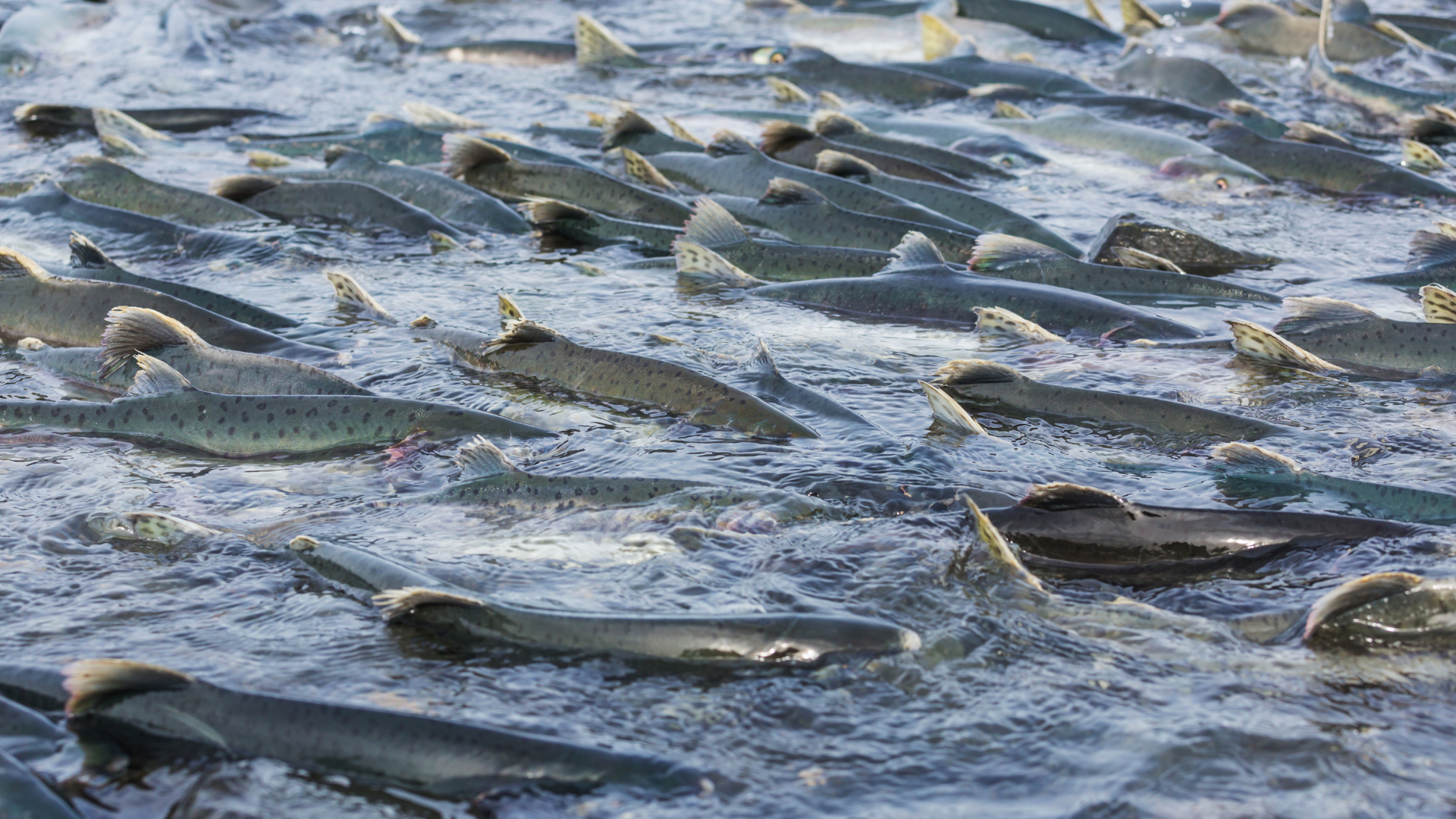
I can tell you the temperature of the water a salmon is swimming in, to a tenth of a degree. I can tell you its oxygen, its salinity, how much it weighed last Tuesday and how efficiently it turned its last meal into flesh. What I usually can't tell you, what almost no one can, in real time, is what's actually happening inside the animal.
That gap has bothered us for a long time.
We are, as an industry, pretty good at measuring everything around the fish. Sensors in pens, feed tables, growth curves, mortality counts. I’d argue that we are far less good at measuring the fish itself - the biology doing the living. We're data-rich on the tank and environment and, oddly, data-poor on the animals in it.
And so most fish health decisions get made the same way: we wait. We wait for the fish to go off its feed, to flash, to hang at the surface, to start dying. Then we investigate; water quality, histology, a vet visit; and try to explain, after the fact, what went wrong. Reactive is the polite word for it. Flying blind is the honest one.
Here's the crux of it all: by the time a problem is visible, it usually isn't new. The biology has often been signalling it for weeks. A fish under strain doesn't announce it - it quietly reallocates, spending energy on coping instead of growing, dialling down its immune system, holding a line you can't see it holding. The growth curve looks fine right up until it doesn't.
Take the moment we transfer smolts to seawater — one of the most demanding transitions we ask of a salmon. On paper, a smolt can look completely ready: right size, right condition, calendar says go. But "ready to move" and "ready to cope" are not the same thing, and the difference lives in the biology, not the size chart. In our own work tracking the blood proteome across smoltification and transfer, the proteins carry a clear signal of how ready a fish really is — well before that readiness, or the lack of it, shows up as losses in the first weeks at sea. It's early work, and there's a lot still to do. But the signal is there, and you cannot see it with a scale or a single enzyme assay.
Or take feed. We talk about feed as 50–70% of production cost, the number is everywhere. What gets discussed far less is that the same feed is also the single biggest biological input into the animal. In a small pilot of ours, two groups of trout on different diets looked more or less identical on the standard metrics, while their blood told two completely different stories — one anabolic and growth-ready, the other quietly defensive, immune activation up and growth signalling down. Same species, same conditions. The only difference was what they were eating. Again: preliminary, and a bigger trial is the obvious next step. But you don't see that in FCR measurements.
So what would it take to stop flying blind?
Not, I'd argue, another sensor bolted to the outside of the pen. The information we're missing is already there — inside the fish, written in its proteins. Proteins are where biology actually happens: they're the working molecules, the enzymes and signals and immune machinery doing the job of being alive at any given moment. Read enough of them at once, from something as simple as a small blood sample, and you get a wide-angle picture of what the animal is really doing — not just how it looks. Thousands of proteins, read together. That breadth is the point. It lets you see the things you went looking for and, just as often, the things you didn't.
I want to be careful here, because this is a field that has earned its scepticism. I'm not describing a crystal ball, and we are not claiming proteomics replaces the vet, the histology, or the water panels you already trust. The science is young, our own studies are early, and we say so plainly. What I am saying is that there's a whole layer of information the industry has largely not been reading, a layer that happens to be where health and stress and robustness actually live.
Because in the end, proactive fish health isn't a slogan. It's a decision about when you choose to look: before the loss, or after it. For most of this industry's history, we've only had tools that let us look after. That's starting to change — and the farms and feed companies investing in reading the biology now are the ones who, in a few years, won't be flying quite so blind.
The data to see earlier already exists inside every fish. The real question is whether we're set up to read it.
We're trying to be. If any of this resonates — if you've ever lost fish you couldn't explain, or wondered what your feed or ingredient is really doing to your animals, we'd genuinely like to hear from you.
